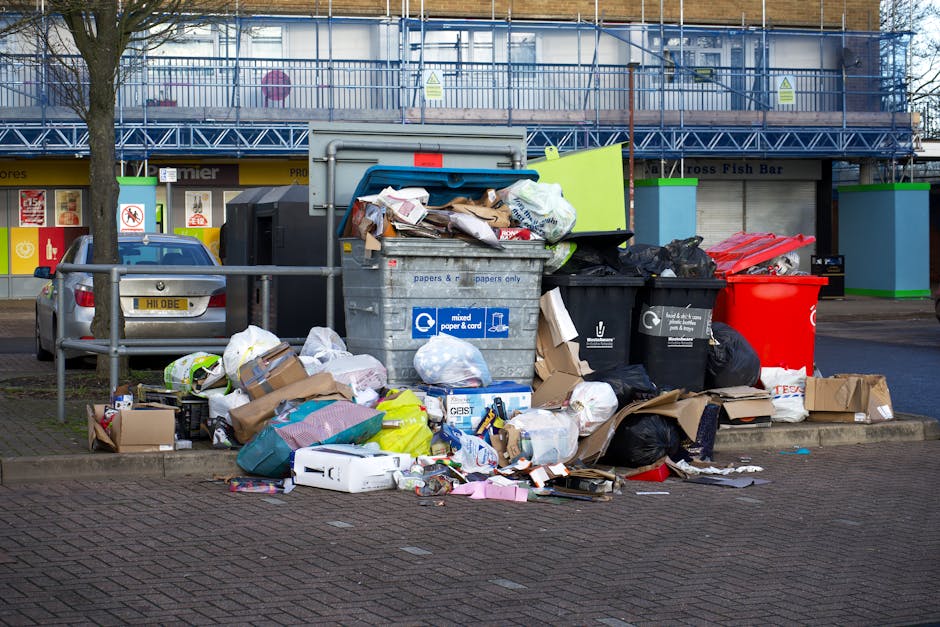
Avoid hidden rubbish removal charges in N12 Finchley
If you have ever booked a rubbish clearance and then watched the final bill creep up, you will know how frustrating it feels. A quoted price can look tidy at first, then suddenly there are extra charges for access, heavier items, awkward loading, or "unexpected" waste. This guide is here to help you avoid hidden rubbish removal charges in N12 Finchley, so you can compare quotes properly, ask the right questions, and book with a bit more confidence. No drama, no guesswork, just a clearer way to handle it.
In a busy part of North London like Finchley, where flats, terraces, basements and tight parking can all affect collection work, pricing needs to be transparent from the start. That is especially true when you are clearing bulky furniture, loft clutter, garden waste, builders' debris, or mixed household rubbish. Let's make the whole thing easier.
Table of Contents
- Why Avoid hidden rubbish removal charges in N12 Finchley Matters
- How Avoid hidden rubbish removal charges in N12 Finchley Works
- Key Benefits and Practical Advantages
- Who This Is For and When It Makes Sense
- Step-by-Step Guidance
- Expert Tips for Better Results
- Common Mistakes to Avoid
- Tools, Resources and Recommendations
- Law, Compliance, Standards, or Best Practice
- Options, Methods, or Comparison Table
- Case Study or Real-World Example
- Practical Checklist
- Conclusion
- Frequently Asked Questions
Why Avoid hidden rubbish removal charges in N12 Finchley Matters
Hidden charges rarely feel hidden when the invoice lands. They feel personal. A job that looked manageable can become expensive very quickly if the quote was based on a vague description rather than a proper assessment. In rubbish removal, small details matter: how many steps there are, whether a lift works, whether vans can park nearby, whether items need dismantling, and whether anything requires specialist handling.
That is why the phrase avoid hidden rubbish removal charges in N12 Finchley is not just a search term. It is a practical decision-making goal. You want to know what you are paying for before anyone starts lifting boxes, carrying sofas, or navigating the communal staircase. A decent provider should be clear about labour, loading time, disposal costs, congestion, access issues, and any item-specific charges. If they are not clear, that is a clue in itself.
To be fair, not every extra cost is unfair. Sometimes a job genuinely changes on arrival. But there is a big difference between a genuine adjustment and a quote that was never specific enough in the first place. The better you understand the pricing structure, the less likely you are to get caught out.
Expert summary: The safest way to avoid surprise charges is to insist on a detailed quote, confirm what is included, explain access and item types honestly, and get the price structure in writing before collection day.
How Avoid hidden rubbish removal charges in N12 Finchley Works
The process is usually simple on paper. You describe the waste, the provider estimates the job, and you agree a price. In practice, the gap between "simple" and "accurate" is where hidden costs appear. A reliable quote usually depends on four things: volume, weight, item type, and access.
Volume is the amount of space the waste will take in the vehicle. Weight matters because disposal fees can increase for dense materials. Item type matters because sofas, fridges, mattresses, builders' rubble, and hazardous materials can all be treated differently. Access covers the practical part: parking, stairs, narrow hallways, long carries, and whether the team can get close to the property.
Here is where hidden rubbish removal charges often creep in:
- the quote was based on photos that missed part of the waste
- the customer forgot to mention heavy or awkward items
- the property has poor access or no parking nearby
- special disposal rules apply to certain materials
- the quote only covered "from kerbside" collection, not full loading
If you want a smoother process, take a few clear photos, describe the waste honestly, and ask whether the quote includes labour, loading, transport, and disposal. If you are planning a broader clearance, pages like waste removal and pricing and quotes can help you understand the wider service approach before you decide.
Key Benefits and Practical Advantages
When you avoid surprise fees, the benefits go beyond money. You also reduce stress, save time, and make it easier to compare providers fairly. That sounds obvious, but in a rushed clear-out it is easy to forget. People often book on the back of a single message or a quick phone call, then regret not asking a few more questions. Happens all the time.
Here are the main advantages of being proactive:
- Clear budgeting: you know what the job should cost before collection day
- Better comparisons: you can compare like-for-like quotes instead of guessing
- Fewer delays: there is less back-and-forth when the team arrives
- Less conflict: everyone understands what has been agreed
- More suitable service choice: you can decide whether rubbish removal, a flat clearance, or a furniture disposal service is the best fit
There is also a trust benefit. A company that explains pricing clearly is usually easier to deal with on the day, because transparency tends to show up in other places too: communication, punctuality, and how they handle awkward items. If you need broader household help, related services such as house clearance or home clearance may be worth exploring if your job is bigger than a simple one-off pickup.
Who This Is For and When It Makes Sense
This matters for a lot of people in N12 Finchley. Homeowners clearing out a spare room. Tenants moving out. Landlords preparing for new occupants. Small businesses dealing with old stock or office clutter. Even someone just trying to reclaim the garage after years of "I'll deal with that later" boxes. You know the sort.
It makes particular sense when:
- you have mixed waste and are not sure how it will be charged
- you are clearing large furniture or appliances
- the property has stairs, a basement, or awkward access
- you need clearance at short notice
- you are comparing several local providers and want a fair basis
- you want to avoid paying extra for things you did not realise mattered
If your job is commercial, office-based, or involves regular waste streams, it may be smarter to look at business waste removal or office clearance rather than treating it like a one-off domestic collection. The right service saves money in the long run, which is often the bit people only notice afterwards.
Step-by-Step Guidance
Here is a practical way to keep control of the cost without making the process complicated.
- List what needs removing. Write down the items, not just the room. "Loft stuff" is too vague. "Three chairs, one wardrobe, six black bags, and a broken printer" is much better.
- Take clear photos. Get wide shots and close-ups. Include awkward corners, access points, and anything heavy. A photo in daylight helps more than a blurry one taken at 8pm by a tired phone camera.
- Explain access clearly. Mention stairs, parking restrictions, narrow gates, basement levels, or long walks from the vehicle. These are the details that matter.
- Ask what the quote includes. Labour, disposal, travel, VAT if applicable, item handling, and loading should all be clear. If anything is excluded, ask why.
- Check item-specific charges. Some waste types are priced differently. Appliances, mattresses, sofas, rubble, and hazardous materials can all affect the final price.
- Confirm the quote in writing. A text or email is better than a vague phone memory. Human memory is funny like that. It likes to rewrite things later.
- Reconfirm on the day if something changed. If you added more waste after the quote, tell the provider before they arrive.
If you are unsure whether your items are suitable for a skip or a collection, the page on what can go in a skip is a useful reference point. And if recycling matters to you, take a look at recycling and sustainability as part of your decision-making.
Expert Tips for Better Results
A few small habits can save a surprising amount of money. Here are the ones that make the biggest difference in real life.
- Be specific, not optimistic. Don't underdescribe the job to get a low quote. It tends to backfire.
- Separate items by type if you can. Mixed waste is often harder to price accurately than a tidy pile of similar items.
- Ask about access charges early. If the vehicle cannot park close by, mention it before the quote is confirmed.
- Check whether dismantling is included. Wardrobes, beds, desks, and some flat-pack furniture may need extra work.
- Flag special items immediately. Fridges, mattresses, and bulky sofas can be charged differently.
- Look for a clear process, not just a low number. A bargain that grows legs on collection day is not really a bargain.
For furniture-heavy jobs, dedicated pages like furniture clearance, furniture disposal, and mattress and sofa disposal can help you judge the most suitable route. If the job involves electrical items, have a look at fridge and appliance removal too.
One small but useful tip: if the waste is spread across several rooms, snap a photo of each room separately. That makes it easier for the provider to quote accurately. It also helps you keep track of what is actually being removed. Sounds mundane. It is, but it works.
Common Mistakes to Avoid
Most hidden fees are avoidable if you know the usual traps. The problem is that people are often in a hurry, especially during a house move or a last-minute clear-out. The quote gets skimmed, the details get rushed, and then the invoice lands with a few surprises. Not ideal.
- Giving a vague description. "A bit of rubbish" is not enough for an accurate price.
- Forgetting about access issues. A first-floor flat with no lift is not the same as a driveway collection.
- Assuming all items are treated the same. They are not. Materials and disposal routes matter.
- Ignoring small print. Terms can include waiting time, loading limits, or exclusion lists.
- Not asking what happens if the job is bigger on arrival. A clear adjustment policy is important.
- Booking only on price. Cheap can be fine, until it is not.
One of the most common mistakes, oddly enough, is not checking whether the company's pricing page spells out how quotes are built. If that detail matters to you, pricing and quotes is a sensible place to start, and the page on payment and security may also help you understand how the process is handled.
Tools, Resources and Recommendations
You do not need specialist software or fancy equipment to avoid surprise charges. A phone, a notebook, and a bit of method are usually enough. But a few simple tools make the process smoother.
- Phone camera: use it to capture the waste from different angles
- Short checklist: note item types, access details, and timing
- Measuring tape: useful for bulky furniture, sheds, and awkward spaces
- Notebook or notes app: record what was agreed during the quote
- Email or text trail: keep the final price and key terms in writing
Recommended pages on this site, depending on what you are clearing, include garage clearance, loft clearance, builders waste clearance, and garden clearance. If you are dealing with sensitive paperwork as part of an office or home clear-out, confidential shredding may also be relevant.
For general company background and service standards, about us can help set expectations, while insurance and safety and health and safety policy are useful if you want extra reassurance before booking. It is the sort of detail people often skip, then regret skipping. Human nature, really.
Law, Compliance, Standards, or Best Practice
When rubbish is being collected and taken away, the key thing is that it should be handled responsibly and lawfully. In UK practice, reputable operators are expected to manage waste properly, avoid fly-tipping, and treat different waste streams appropriately. You do not need to become an expert in waste law to protect yourself, but you should expect the provider to behave professionally and transparently.
Best practice usually includes:
- clear upfront pricing and a written quote where possible
- proper handling of recyclable and non-recyclable materials
- careful treatment of hazardous or restricted waste
- safe loading and transport
- respect for property, shared spaces, and neighbours
If hazardous materials may be involved, it is better to stop and ask first than to assume they can go with ordinary rubbish. The page on hazardous waste disposal is the right place to think about that kind of job. The same goes for broader sustainability concerns: good pricing should not come at the expense of responsible disposal.
Also worth saying plainly: if a provider is evasive about where the waste goes, or keeps changing the explanation, that is not a great sign. Transparency matters. It really does.
Options, Methods, or Comparison Table
Different clearance methods suit different jobs. Choosing the wrong one can create unnecessary costs, which is exactly what you are trying to avoid. Here is a simple comparison.
| Method | Best for | Typical strength | Watch out for |
|---|---|---|---|
| One-off rubbish removal | Mixed household or general waste | Flexible and quick | Quote accuracy depends on clear description |
| Skip hire | Longer projects with space for a skip | Convenient for ongoing loading | Permit issues, skip size, and prohibited items |
| Flat clearance | Flats, shared buildings, and bulky mixed contents | Good for access-managed removals | Stairs, lifts, and building access need clarity |
| Furniture or appliance-specific removal | Single large items or a narrow item type | Simple pricing when items are clearly defined | Extra handling for heavy or specialist items |
If you are weighing skip hire against collection, the page on what can go in a skip can help you judge whether a skip is practical. For flats and smaller homes, flat clearance is often the more realistic option, especially where access is awkward or time is tight.
Case Study or Real-World Example
Here is a typical Finchley scenario. A resident in a first-floor flat wants to clear two wardrobes, a broken chest of drawers, a mattress, and several bags of mixed clutter. The first quote they receive sounds reasonable, but it is based only on a quick message saying "some furniture and rubbish." No access details, no item list, no mention of the tight stairwell or the lack of parking directly outside.
When the collection team arrives, the job takes longer than expected and there is more loading than the quote assumed. If the service had been priced properly, none of this would have been a surprise. But because the details were thin, the final cost shifts. That is the pattern hidden charges often follow.
Now compare that with a better approach. The customer sends photos of each item, notes that the lift is out of service, mentions the street parking situation, and confirms that the mattress is part of the job. The quote is slightly higher at the start, but it is realistic. On the day, there is no awkward conversation. The team loads the items, the customer pays what was agreed, and the job is done. Simple. Peaceful, even.
That second version is what you want. It is not about chasing the absolute cheapest number. It is about getting the right number, first time.
Practical Checklist
Use this before you book.
- Item list ready: I know exactly what needs removing
- Photos taken: I have clear images of the waste and access points
- Access explained: stairs, parking, distance, and building layout are noted
- Item types confirmed: furniture, appliances, rubble, or hazardous items are identified
- Quote is itemised or clearly explained: I know what is included
- Extra charges asked about: I have checked for labour, access, wait time, or disposal differences
- Terms reviewed: I have looked at conditions and payment expectations
- Written confirmation saved: I have a text or email record
- Alternative service considered: skip hire, furniture removal, or full clearance if needed
- Recycling or specialist handling checked: I know whether any items need special treatment
If you want a fuller understanding of how collections are handled, the pages on house clearance and home clearance can help frame bigger jobs, while modern slavery statement may matter if you are looking closely at ethical business practices. That last one may seem like a side note, but for some readers it matters a lot.
Conclusion
To avoid hidden rubbish removal charges in N12 Finchley, the main thing is simple: be specific, ask direct questions, and get clarity before anyone turns up with a van. Most pricing problems come from missing details rather than bad intent, but the result is the same if you are not careful. A few minutes spent on photos, item lists, access notes, and written confirmation can save a surprising amount of hassle later.
Whether you are clearing a single sofa, a cluttered loft, or a full flat, a transparent quote is worth more than a tempting headline price. It gives you control, and honestly, that control makes the whole job feel lighter. Less stress. Fewer surprises. Better outcomes.
If you are comparing services and want a clearer next step, look at the service pages that match your job, review the pricing information, and ask for a quote that reflects the real work involved. That way you are choosing on facts, not hopes.
Get a free quote today and see how much you can save.
Frequently Asked Questions
What are hidden rubbish removal charges?
Hidden rubbish removal charges are extra costs that were not made clear at the time of the quote. They may relate to access, labour, item type, heavier waste, or disposal conditions. The safest way to avoid them is to ask exactly what is included before booking.
How can I avoid surprise fees when booking rubbish removal in N12 Finchley?
Give a clear item list, share photos, explain access issues, and ask whether the quote includes loading, transport, and disposal. Written confirmation helps too. That extra bit of clarity makes a big difference.
Why do rubbish removal prices change after a quote?
Prices can change if the waste volume is larger than expected, if there is difficult access, or if specialist handling is needed. Sometimes the original quote was just too vague. Not ideal, but common.
Is the cheapest rubbish removal quote always the best option?
No. A very low quote may exclude labour, access, or disposal costs. A better quote is one that is clear and realistic, even if it is not the lowest at first glance.
Do I need to mention stairs or parking when getting a quote?
Yes, absolutely. Stairs, lifts, parking restrictions, and long carries can all affect the cost. If you leave those details out, the quote may not match the actual job.
Can furniture and appliances cost more to remove?
Yes. Large furniture, mattresses, fridges, and other appliances can have different handling or disposal requirements. If those items are part of your job, mention them early and check the price structure.
What should be included in a good rubbish removal quote?
A good quote should explain labour, loading, transport, disposal, and any special charges that may apply. It should also make clear what happens if the job changes on the day.
Is skip hire better than rubbish removal for avoiding hidden costs?
Not always. Skip hire can be useful for bigger ongoing projects, but it may bring permit, size, or access issues. For flats or tight spaces, a collection service can be more straightforward. It depends on the job.
What happens if I have hazardous waste?
You should raise it before booking. Hazardous items may need specialist handling and should not be mixed with general rubbish. If you are unsure, ask the provider directly and use the relevant service information before proceeding.
How do I compare rubbish removal providers fairly?
Compare what is included, not just the headline price. Look at access assumptions, item type coverage, payment terms, and whether the quote is written or just verbal. Like-for-like comparison is the only fair one.
Should I get everything in writing?
Yes. A written quote or message trail is the best protection against misunderstandings. Even a short text confirming the scope and price is better than relying on memory.
Where can I learn more about clearance options before booking?
You can review related service pages such as waste removal, flat clearance, garage clearance, and office clearance to see which option suits your situation best.